
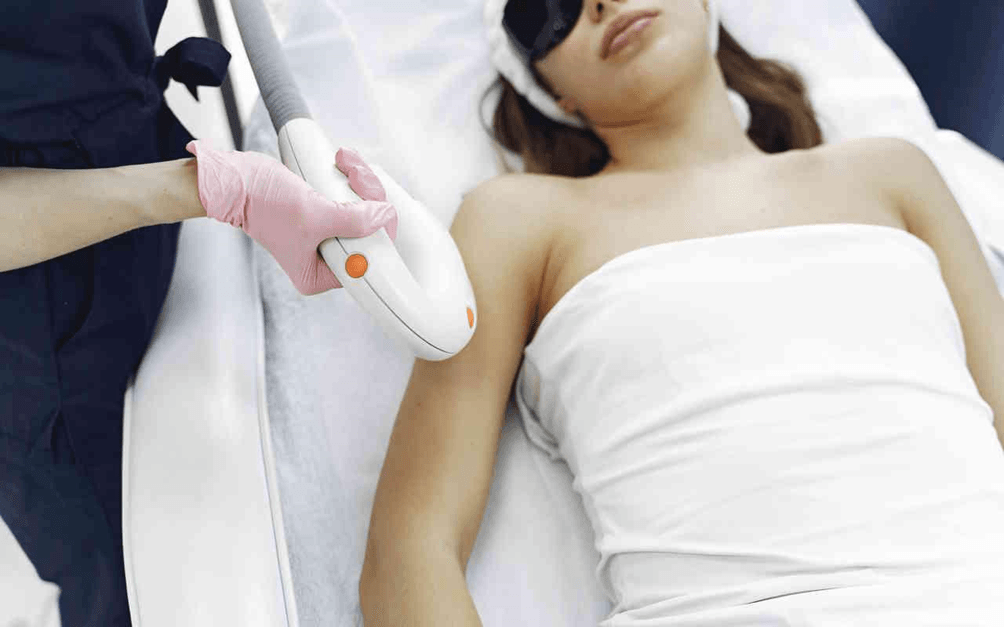
Laser hair removal has been gaining popularity in recent years. After all, body hair can be a real nuisance!
Today, laser treatment eliminates 95% of body hair quickly, easily, and permanently. For these reasons, permanent laser hair removal is naturally generating a lot of interest.
Although the treatment can be expensive, permanent laser hair removal is also a cost-effective method in the long term. In addition to permanent hair removal, laser treatment improves the appearance of the skin, making it smoother, softer, and firmer. However, one question is repeatedly asked: Does laser hair removal hurt?
Pain is indeed a recurring concern for anyone considering this treatment. What is the reality?
We are here to reassure you.
Follow our guide!

Is laser hair removal painful?
When it comes to laser hair removal, there are three options available:
- Laser hair removal,
- Electrolysis,
- Intense pulsed light (IPL).
A laser emits a powerful, highly precise wavelength. IPL emits a light beam that is not as powerful or effective as a laser at eliminating body hair.
As a result, IPL requires more sessions than laser treatment for permanent hair removal. IPL also carries a greater risk of burns than laser hair removal.
Based on this information, it is important to know that laser hair removal produces intense heat. This heat burns the hair follicle at its root.
So, does laser hair removal hurt? Does the laser cause pain?
How can we explain the discomfort associated with IPL?
Although it can cause discomfort or irritation in some people, permanent laser hair removal is not painful. It is becoming increasingly painless thanks to state-of-the-art equipment fitted with the latest cooling systems.
Of course, everyone reacts differently to the treatment.
It is important to remember that as you attend more sessions, you will become accustomed to the treatment, and the discomfort will gradually diminish. Overall, rather than describing it as painful, it is more accurate to call it uncomfortable. Generally speaking, the discomfort experienced during laser hair removal is well tolerated.
Based on various testimonials and descriptions of the discomfort associated with permanent laser hair removal, people have reported:
- Mild tingling,
- A sensation similar to receiving small elastic snaps on the skin
- A sensation of intense heat.
Because the laser flash is very quick, the sensation lasts only a fraction of a second.
Naturally, these sensations are more noticeable on areas that take longer to treat. You may also be more sensitive at the beginning of the treatment, but this will gradually diminish with each session.
Overall, the treatment is manageable and many people even describe it as painless.
With the latest innovations, such as the diode laser , which is a highly effective, state-of-the-art technology equipped with a highly efficient cooling system, the sensations become almost imperceptible.
For your information, the sssKin clinic uses various diode laser models and settings to provide a treatment tailored to all skin types.
What factors can affect discomfort during laser hair removal?
The factors that can affect the level of discomfort include:
- Skin type :
Generally, darker skin is more sensitive to pain than lighter skin because of the different levels of melanin. The sensation is one of intense heat, accompanied by some mild irritation.
- The area being treated :
As we will see in more detail in the next section, some areas are much more sensitive than others.
- The laser intensity used:
This factor is mainly determined by the settings applied by your technician and the type of laser used. The higher the laser intensity, the more intense the heat generated and the greater the risk of discomfort and side effects. Of course, a higher laser energy is more effective at destroying unwanted hair at the root. However, the practitioner must take into account each person's skin type and sensitivity to ensure a comfortable, painless treatment.
- Individual sensitivity:
Some people have a higher pain tolerance than others.
Which areas are most sensitive during laser hair removal?

The most sensitive areas are the face, the bikini line, the intergluteal cleft, the scrotum and the underarms.
These areas have very thin skin and are densely packed with nerve endings. They also generally have a high concentration of body hair.
It is therefore no wonder that these areas are much more sensitive!
Which techniques can minimise discomfort during laser hair removal?
As we have explained, rather than pain, the treatment causes discomfort that can be reduced.
You should also follow the precautions to take before a hair removal session.
It is also important to avoid intense exercise, saunas, very hot showers and anything that can raise your body temperature before a permanent laser hair removal session. Avoid also having your session just before your period, as you will be more sensitive at that time.
You have three options for minimising discomfort:
- Using anaesthetic creams :
One hour before your hair removal session, you can apply an anaesthetic gel or cream to the area that will be treated with the laser. These products contain active ingredients that can numb the area and make it less sensitive. Speak to your therapist about obtaining these products.
- Equipment settings :
Correct settings and expert handling of the laser by an experienced practitioner can significantly reduce the risk of discomfort and pain.
For your permanent laser hair removal treatment, choose a facility, salon or clinic that uses the latest laser technology, such as diode lasers.
- Breathing and relaxation techniques :
One technique that can help you relax before, during and after a laser hair removal session is controlled breathing. This can reduce stress and anxiety.
Breathing exercise : Breathe in slowly through your nose while counting to four in your head. Hold your breath for another four counts, then breathe out slowly through your nose for four counts. Hold your breath again for four counts. Repeat this four times.
What advanced technologies can reduce discomfort?
In laser hair removal, the latest technology is diode laser technology, which is now at the forefront of laser treatments.
There are different types of lasers available for permanent laser hair removal. Some use different wavelengths, power levels, fluences and pulse durations.
This also means that some lasers are not suitable for all skin types and are therefore not always highly effective. Some can cause more side effects, such as minor burns, while others do not absorb enough melanin, especially in darker skin, which can extend the treatment.
In conclusion, depending on your skin type and hair density, not all lasers will produce the same results, and you may need more sessions to achieve the desired outcome.
All of this has been superseded by the latest cutting-edge technology: the diode laser.
This laser represents the latest advancement in permanent laser hair removal.
Diodes offer deep penetration, allowing them to effectively treat all skin types, even the darkest.
The diode laser treats all hair sizes, from the finest to the thickest, and provides effective, comprehensive hair removal on all areas of the body. It is versatile, highly effective and equipped with an ultra-efficient cooling system, making it comfortable for everyone. With multiple wavelengths in a single device, different absorption levels, and settings ideal for fair, dark and black skin, the diode laser meets all your needs.
Furthermore, because the pulse duration is significantly reduced with this type of laser, even treatments of larger areas such as the legs become faster and virtually painless.
Laser hair removal compared with other hair removal methods

Laser hair removal and waxing : if we compare laser hair removal with other methods such as waxing, we can see that waxing has been used for centuries, while laser technology is much newer.
Each technique has its advantages and disadvantages:
- Waxing is a quick and effective way to remove hair at the root. It can be done in a salon or at home with the appropriate equipment.
It can be slightly painful on the most sensitive areas and may cause redness, skin irritation, infections and, in some people, strawberry skin, a side effect of hair removal.
Hair grows back after a few weeks.
- Laser hair removal, on the other hand, uses technology that targets the hair follicles at the root. Over time, this slows or even stops hair growth. After completing the full treatment, you will only need one or two touch-up sessions per year.
This technique is performed in salons, beauty clinics or beauty centres. The laser must be operated by a certified practitioner.
This method is less painful and causes only tingling or heat. The results are more long-lasting, and after the full treatment, 95% of the hair is permanently removed. The latest diode laser technology has revolutionised laser hair removal and is effective on all skin types.
Conclusion
Until now, you may have only had one question in mind: is laser hair removal unbearably painful?
You now have a clearer idea of what to expect from laser hair removal.
As you will have seen, it is more accurate to describe the discomfort as side effects rather than pain. You also now know about the latest cutting-edge technology: diode lasers. All you need to do is choose the right practitioner who uses this advanced equipment. Furthermore, you now know that laser hair removal mainly causes discomfort that quickly diminishes, so there is no need to worry about unbearable pain—it is not that painful!
For this reason, the SSSKIN clinic is a clinic worth visiting. Permanent laser hair removal is one of their specialities, and they also use the latest technology for all skin types.
Always choose a trusted salon or beauty clinic. During your initial consultation before starting permanent laser hair removal, make sure to ask about the techniques they use, such as diode lasers, so you can feel informed and reassured!
Frequently asked questions
How long should I wait between two laser hair removal sessions?
Laser hair removal sessions should be spaced to follow the hair growth cycle. For the body, sessions should be 4 to 8 weeks apart, while for the face, sessions should be 4 weeks apart. However, as the treatment progresses, the time between sessions may be extended because the hair treated with the laser grows back more slowly.
What is the most effective method of permanent hair removal?
In practice, laser treatment is more effective than IPL. Lasers penetrate more deeply and absorb melanin more effectively. Diode lasers are the latest technology in permanent laser hair removal.
Why can laser hair removal be uncomfortable?
During laser hair removal, the laser may cause discomfort such as intense heat or tingling. This is due to the heat generated by the laser light. These sensations are more intense on certain sensitive areas.
What are the disadvantages of laser hair removal?
In some cases, particularly when recommendations and contraindications are not followed, laser hair removal can cause side effects such as burns or skin pigmentation problems. Melanin is present in the hair and is also the pigment responsible for tanning.
How can I numb my skin before hair removal?
Before hair removal, thoroughly clean the area that will be treated. One hour before your session, apply a thick layer of anaesthetic cream or gel, following the recommended dosage. Do not apply the cream if you have any open wounds or cuts.
Book a free consultation at SSSKIN
If you want to find out which permanent hair removal treatment is best for you, our certified therapists are ready to welcome you for a free initial consultation at SSSKIN.
Partager:
Laser hair removal, electrolysis or pulsed light: which to choose?
How to get rid of hair after laser hair removal?