

At-home “laser” devices are, in most cases, IPL (Intense Pulsed Light) devices: pulsed light that is more diffuse than a medical laser, generally less powerful and less customizable. The result: it's convenient, but it's not a magic solution, and it's not suitable for everyone.
In this guide, you will understand:
-
the real risks (and how to avoid them),
-
the limitations (results, areas, skin/hair types),
-
and for whom at-home IPL can be a reasonable option.
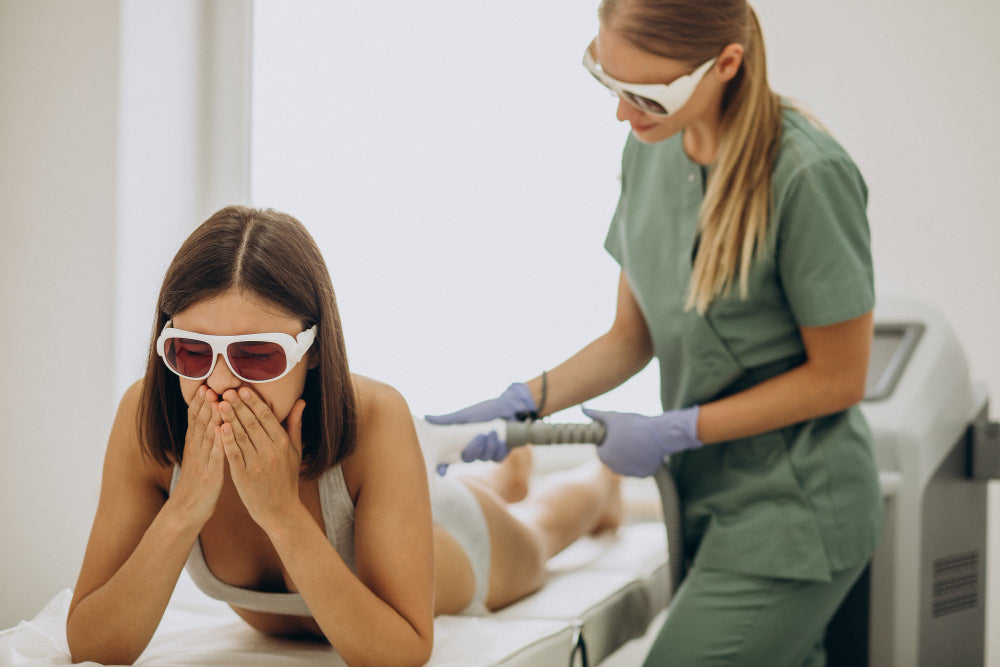
If you are looking for more supervised and effective treatment, you can compare it with a laser hair removal session in a salon (diagnosis, adapted parameters, follow-up).
At-home IPL vs. salon laser hair removal: the difference in one minute
-
At-home IPL: broad-spectrum light, devices designed for the "general public," often gentler but also slower to show visible results.
-
Salon laser: more targeted technology, adjusted parameters (skin, hair, area), and supervised protocol.
To understand the technical principle (hair targeting, parameter logic), the diode laser hair removal technology page lays the groundwork.
Risks (and why they happen)
The most common risks with at-home IPL come from 3 mistakes: wrong candidate, wrong setting, wrong area.
1) Burns and irritations
IPL heats melanin. If the skin is too pigmented (tan, naturally darker skin, or hyperpigmentation), the heat can concentrate in the "wrong place."
2) Spots (hyperpigmentation) or localized lightening
Post-treatment irritation can leave a mark, especially on sensitive, tanned, or spot-prone skin.
3) Problems in "avoid" areas
Some areas are riskier: near the eyes, on/near pigments, or highly reactive areas.
Clear (general public) information on precautions and possible side effects of light/laser procedures is available via the American Academy of Dermatology.
Limitations (what ads don't say enough)
1) Results depend heavily on the skin/hair combination
IPL works best when there is a contrast: light to medium skin + dark hair.
It is often less effective if:
-
very light hair (blonde, red, gray),
-
fine facial vellus hair,
-
or if you have very light hair on light skin (little pigmented "target").
If your goal is a hair-by-hair result on light/isolated hairs, a more precise alternative can be electrolysis hair removal.
2) It's long (and requires consistency)
At-home IPL requires real discipline: spaced, repeated sessions, over several weeks/months. Many people stop too early and conclude that "it doesn't work."
3) Some areas are complicated to treat correctly
-
Very curved areas, areas close to mucous membranes, areas where visibility is poor: higher risk of error.
-
Face: extra caution (more reactive skin, fine vellus hair, proximity to eyes).
For whom can at-home IPL be a good option?

At-home IPL may be relevant if:
-
you have light to medium skin and dark hair,
-
you are targeting simple areas (legs, arms, underarms depending on tolerance),
-
you are willing to follow a regular protocol,
-
you accept a "lasting reduction" result rather than an unrealistic promise.
For whom it is not a good idea (or needs validation)
Instead, seek medical advice or supervised treatment if:
-
you have dark skin or tan easily,
-
you are prone to spots (hyperpigmentation, melasma),
-
you have skin lesions to monitor (atypical moles),
-
you are taking photosensitizing treatments (if in doubt: seek medical advice),
-
you are pregnant/breastfeeding (caution, especially if your skin is already very reactive),
-
you want to treat an area near the eyes or a very sensitive area.
A simple and concrete article on safety rules (areas not to treat, caution around pigments, etc.) is summarized by the Cleveland Clinic.
Mini-table: At-home IPL or salon, which to choose?
| Criterion | At-home IPL | Salon laser |
|---|---|---|
| Speed of results | Slower, requires regularity | Faster and better adjusted |
| Skin/hair adaptation | Limited (predefined modes) | Customized parameters |
| Difficult areas (face, bikini) | Riskier / more delicate | Supervised, careful protocol |
| Budget | Initial purchase, "spread out" cost | Sessions, more direct cost |
| Safety level | Depends heavily on the user | Supervision + follow-up |
If you are unsure, a simple strategy is to start with a consultation and compare with supervised laser hair removal, especially for the face or sensitive areas.
Safety Checklist (if you choose at-home IPL)
-
No sessions on tanned skin / fake tan.
-
Never on pigmented areas (e.g., areas with pigments, significant moles, tattooed areas).
-
Avoid the eye contour.
-
Test a small area and observe the reaction.
-
Strictly follow the instructions (power, frequency, authorized areas).
-
If it burns "strongly," if the skin marks or darkens: stop and seek advice.
FAQ
At-home IPL = laser hair removal?
Not exactly. It is often called "at-home laser," but many consumer devices are IPL. The goal is similar (to reduce regrowth), but the technology, power, and precision differ.
Is it dangerous?
It is not "inherently dangerous," but the risks increase if the skin/hair is not compatible, if the skin is tanned, if the area is sensitive, or if the setting is too strong.
Is it OK for the face?
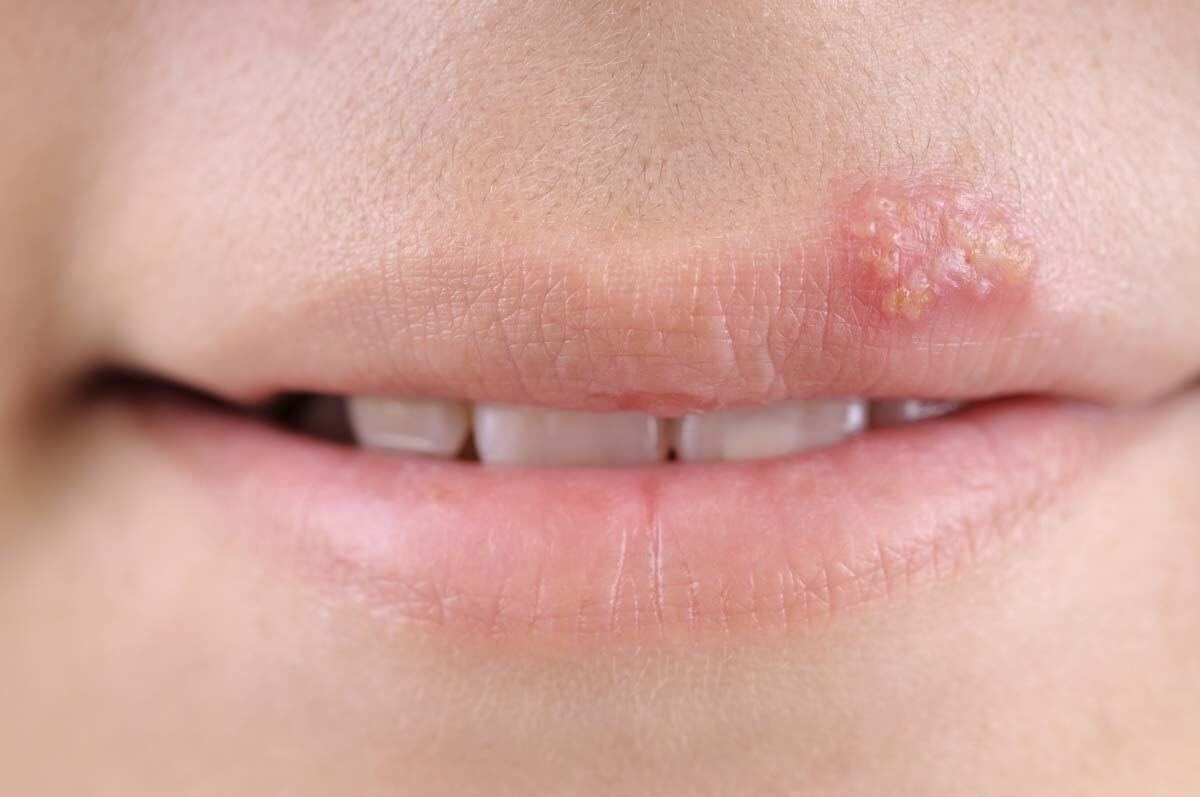
This is the area where the most caution is needed (reactive skin, vellus hair, proximity to eyes). If you have a history of spots, recurrent cold sores, or very sensitive skin, seek advice beforehand.
Why does it work for some and not for others?
Because IPL targets melanin: if the hair is light or the skin/hair contrast is low, the effectiveness decreases.
When to choose a salon over at-home?
If you want faster results, if you are treating a sensitive area, if you have spot-prone skin, or if you are unsure of the correct protocol.

Share:
5 comments
I have been suffering from a deadly disease (Hsv) for the past 2 years now, I had spent a lot of money going from one places to another, from churches to churches, hospitals have been my home every day residence. Constant checks up have been my hobby not until this faithful day, I was searching through the internet, I saw a testimony on how Dr Oyagu helped someone in curing his (Hsv) herpes disease, quickly I copied his email which is oyaguherbalhome@gmail.com just to give him a test I spoke to him, he asked me to do some certain things which I did, he told me that he is going to provide the herbal cure to me, which he did, then he asked me to go for medical checkup after some days after using the herbal cure, behold I was free from the deadly disease, he only asked me to post the testimony through the whole world, faithfully am doing it now, please brothers and sisters, he is great, I owe him in return. if you are having a similar problem just email him on oyaguherbalhome@gmail.com visit his website https://oyaguspellcaster.wixsite.com/oyaguherbalhome Or WhatsApp him via +2348101755322
I have had Human Papillomavirus (HPV) for 3 months now. I have searched for cures everywhere. I have spent more money on the disease to make sure that it got cured. I was searching online on Facebook, I got a review on how Dr Lucky cured People with herbs. So I ask him for help and the way he talks to me I believe in the medicine because other people are getting cured completely and I order the medication. I got it and I applied it to this disease. Within 14 days I was cured from the HPV thanks to herbal medication Dr Lucky sent to me. If you need help he will be able to help you get rid of the Diseases, Visit his http://facebook.com/remedyforherpes Dr.Lucky ONCE AGAIN THANK YOU SIR Contact Him WhatsApp Number; +2347071651140 Or Email him at; drluckyherbalcure@gmail.com
I was diagnosed with HSV type 2 and have been dealing with it for the past two years. Recently, I came across online reviews about natural cures, where people shared their success stories of recovery through herbal treatments. After learning more, I decided to order the herbal treatment they mentioned. After taking it for just two weeks, I was completely cured! I highly recommend anyone who has been diagnosed with HSV type 2 or other similar viruses consider this treatment. You can contact Dr Lucky for more information. WhatsApp Him +2347071651140 Doctor Lucky Herbal Cure and Email drluckyherbalcure@gmail.com
I have had Human Papillomavirus (HPV) for 3 months now. I have searched for cures everywhere. I have spent more money on the disease to make sure that it got cured. I was searching online on Facebook, I got a review on how Dr Lucky cured People with herbs. So I ask him for help and the way he talks to me I believe in the medicine because other people are getting cured completely and I order the medication. I got it and I applied it to this disease. Within 14 days I was cured from the HPV thanks to herbal medication Dr Lucky sent to me. If you need help he will be able to help you get rid of the Diseases, Visit his http://facebook.com/remedyforherpes Dr.Lucky ONCE AGAIN THANK YOU SIR Contact Him WhatsApp Number; +2347071651140 Or Email him at; drluckyherbalcure@gmail.com
I was diagnosed with HSV type 2 and have been dealing with it for the past two years. Recently, I came across online reviews about natural cures, where people shared their success stories of recovery through herbal treatments. After learning more, I decided to order the herbal treatment they mentioned. After taking it for just two weeks, I was completely cured! I highly recommend anyone who has been diagnosed with HSV type 2 or other similar viruses consider this treatment. You can contact Dr Lucky for more information. WhatsApp Him +2347071651140 Doctor Lucky Herbal Cure and Email drluckyherbalcure@gmail.com