
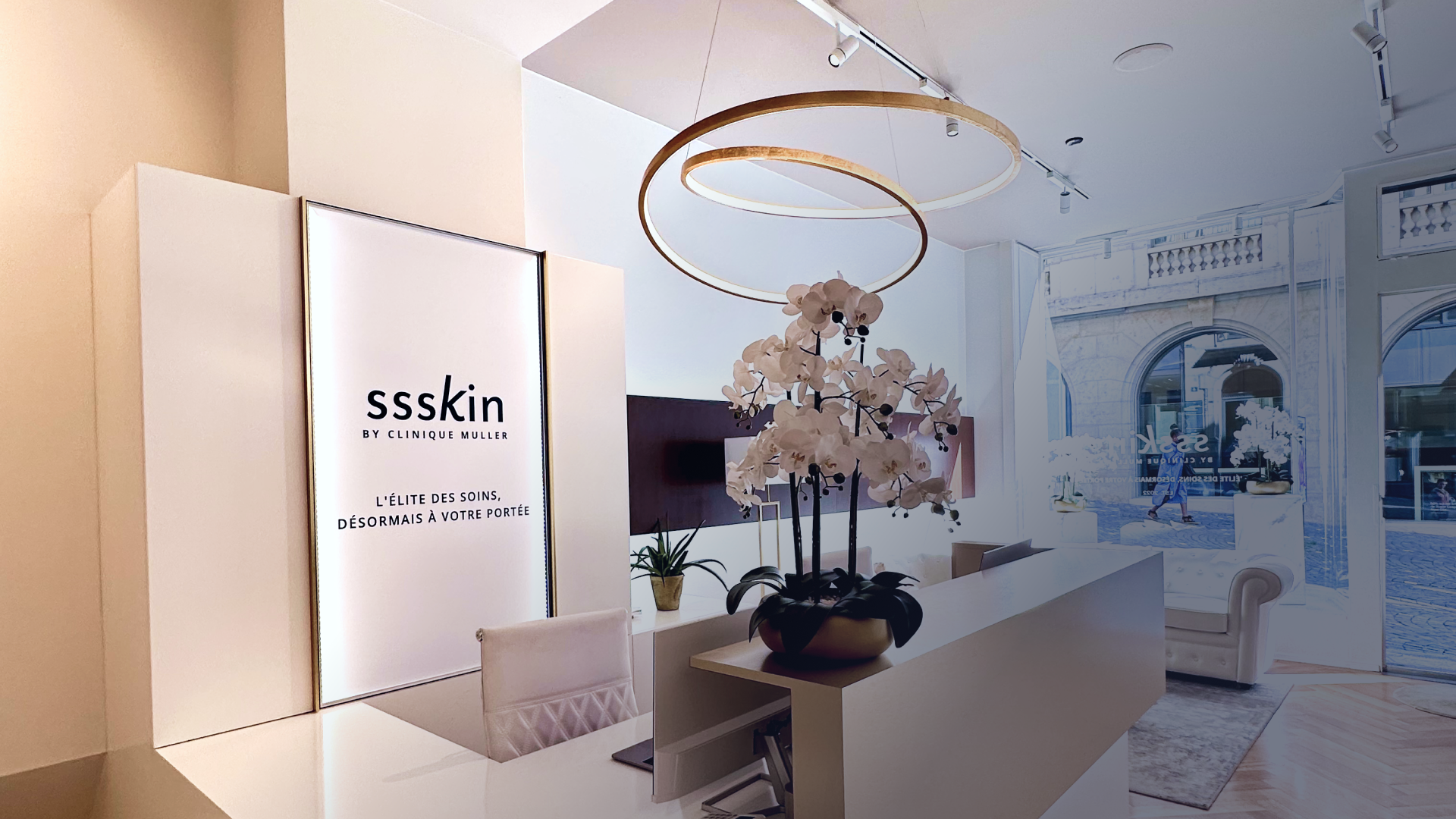
Laser hair removal has become a common treatment, but in Switzerland it is strictly regulated for a simple reason: the devices (laser, light, sometimes ultrasound depending on the technology) can exceed thresholds that could damage the skin and eyes if not used properly. The legal framework therefore aims to protect clients, clarify who can do what, and impose requirements for training, safety, and traceability.
At SSSKIN, we talk a lot about performance and comfort, but a good result also starts with a non-negotiable point: respect for Swiss rules and safety standards.
NISSG, LRNIS, O-LRNIS: what exactly are we talking about?
You will often see the acronym NISSG (in German): this is the commonly used name for the Federal Act on Protection against Dangers from Non-Ionizing Radiation and Sound (LRNIS). This law is supplemented by the Ordinance O-LRNIS , which specifies, among other things, the requirements, the categories of treatment, and the cases subject to medical discretion.
In practice, this legislation governs, in particular:
-
certain cosmetic treatments using lasers , light sources or other forms of energy,
-
the competency requirements (certificates),
-
and the limits : what is allowed, reserved for doctors, or prohibited.
Since when is it mandatory for laser hair removal?

Key point: since June 1, 2024 , treatments listed in the O-LRNIS that use non-ionizing radiation or sound can only be carried out by people with appropriate certification of competence (depending on the type of treatment).
This is a major change: the law is not limited to "having a machine", it imposes a verifiable competence .
Who is authorized to perform laser hair removal in Switzerland?
1) General case: mandatory skills certificate
For the cosmetic treatments in question (including laser hair removal), the basic rule is:
-
The person performing the treatment must have the certificate of competence corresponding to the technique used .
In other words: it is not “the center” that is certified, it is also the operator who must be authorized for the treatment he performs.
2) Specific cases: medical reserve (doctor only)
Certain techniques and treatments are subject to medical supervision . In these cases, only a physician (or clinic staff directly trained and under their responsibility) is authorized to perform them. The FOPH (Federal Office of Public Health) specifically mentions: high-intensity focused ultrasound (HIFU) , ablative laser , long-pulse Nd:YAG laser , etc.
If you are comparing offers, this is a good point of reference: not all technologies are legally equivalent .
What obligations must a center respect (beyond “legal”)?
Compliance is not simply a matter of certification. The expected best practices revolve around 5 pillars: selection , safety , settings , traceability , and monitoring .
1) Consultation and evaluation before treatment
A reputable center should address the following:
-
your phototype, your skin history, recent sun exposure,
-
possible contraindications,
-
and the treatment strategy (areas, pace, realistic objectives).
This is also the advantage of a structured approach such as a dedicated consultation before a laser hair removal session (SSSKIN), rather than a “let’s start right away”.
2) Safety: eyes, skin, environment
Safety obligations typically relate to:
-
appropriate eye protection,
-
a zone protocol (signaling, access control),
-
controlled and reproducible parameters.
On the technical side, you can already understand the basics via the SSSKIN page on diode laser hair removal technology (wavelengths, targeting logic, cooling).
3) Settings: quality also means caution
In laser hair removal, "stronger" is not necessarily "better." The correct setting depends on:
-
the area,
-
the phototype,
-
the type of hair,
-
and skin tolerance.
A serious protocol often includes gradual adjustments and post-session instructions (UV, heat, friction, etc.).
4) Traceability: file, settings, consent
The spirit of the regulations (and cantonal controls) is pushing towards:
-
the documentation of the sessions,
-
clear information for the client (benefits/risks/alternatives),
-
and proof that the person handling the case is indeed competent to perform the act.
5) Alternatives: when electrolysis is more appropriate
In some cases (very light hair, hormonally affected areas, finishing touches), an alternative may be recommended: electrolysis. At SSSKIN, you can read about how electrolysis hair removal technology works and, if it's relevant to your situation, learn more about electrolysis hair removal .
Why is this important to you (beyond the “paper”)?
A strict legal framework has a direct effect on:
-
reducing avoidable risks (burns, pigment reactions, irritation),
-
the consistency of the results (appropriate settings + logical session rhythm),
-
and transparency: you know what you are buying, and who is making it.
The law exists because these devices are not gadgets: competence and safety are at the heart of the outcome.
How to quickly check if a center is “clean”?

Simple checklist before booking:
-
Are you offered a real assessment (skin, hair, constraints)?
-
Can the center clearly explain the technology used (diode laser, etc.)?
-
Is the person performing the procedure authorized to do so (appropriate certificate)?
-
Are you given serious instructions before/after the session?
-
Are you also told about alternatives if your profile requires it (e.g., electrolysis)?
To understand the official framework for certifications, you can consult the FOPH information on certifications of competence for treatments using non-ionizing radiation or sound .
For the legal basis (official text), see the O-LRNIS on Fedlex .
FAQ - Swiss law and laser hair removal
Is laser hair removal “permitted” in Switzerland?
Yes, but it is regulated : some treatments require a certificate of competence and others are reserved for doctors depending on the technique used and the area treated.
Since when has a skills certificate been mandatory?
Since June 1, 2024 for the treatments concerned listed in the O-LRNIS.
Diode laser and pulsed light: is it the same rule?
They can be covered by the same framework as long as it involves treatments using non-ionizing radiation and listed in the ordinance: it is not the “marketing” of the machine that counts, but the category of treatment and the requirements attached to it.
Is HIFU subject to any special rules?
Yes: high-intensity focused ultrasound (HIFU) is among the techniques cited by the FOPH as subject to medical supervision (doctor or office staff directly instructed).
What should you be asked before a laser hair removal session?
At a minimum, the following information should be provided: skin type, recent sun exposure, skin history, treatment areas, expectations, and an explanation of the before/after instructions. If nothing is asked, it's not a good sign.
What if I want a 100% "hair by hair" alternative?
Electrolysis is often the most precise option for certain skin types. You can compare it with electrolysis technology and electrolysis hair removal (SSSKIN).


Share:
6 comments
I have been suffering from a deadly disease (Hsv) for the past 2 years now, I had spent a lot of money going from one places to another, from churches to churches, hospitals have been my home every day residence. Constant checks up have been my hobby not until this faithful day, I was searching through the internet, I saw a testimony on how Dr Oyagu helped someone in curing his (Hsv) herpes disease, quickly I copied his email which is oyaguherbalhome@gmail.com just to give him a test I spoke to him, he asked me to do some certain things which I did, he told me that he is going to provide the herbal cure to me, which he did, then he asked me to go for medical checkup after some days after using the herbal cure, behold I was free from the deadly disease, he only asked me to post the testimony through the whole world, faithfully am doing it now, please brothers and sisters, he is great, I owe him in return. if you are having a similar problem just email him on oyaguherbalhome@gmail.com visit his website https://oyaguspellcaster.wixsite.com/oyaguherbalhome Or WhatsApp him via +2348101755322
I have been suffering from a deadly disease (Hsv) for the past 2 years now, I had spent a lot of money going from one places to another, from churches to churches, hospitals have been my home every day residence. Constant checks up have been my hobby not until this faithful day, I was searching through the internet, I saw a testimony on how Dr Oyagu helped someone in curing his (Hsv) herpes disease, quickly I copied his email which is oyaguherbalhome@gmail.com just to give him a test I spoke to him, he asked me to do some certain things which I did, he told me that he is going to provide the herbal cure to me, which he did, then he asked me to go for medical checkup after some days after using the herbal cure, behold I was free from the deadly disease, he only asked me to post the testimony through the whole world, faithfully am doing it now, please brothers and sisters, he is great, I owe him in return. if you are having a similar problem just email him on oyaguherbalhome@gmail.com visit his website https://oyaguspellcaster.wixsite.com/oyaguherbalhome Or WhatsApp him via +2348101755322
I was diagnosed with HSV type 2 and have been dealing with it for the past two years. Recently, I came across online reviews about natural cures, where people shared their success stories of recovery through herbal treatments. After learning more, I decided to order the herbal treatment they mentioned. After taking it for just two weeks, I was completely cured! I highly recommend anyone who has been diagnosed with HSV type 2 or other similar viruses consider this treatment. You can contact Dr Lucky for more information. WhatsApp Him +2347071651140 Doctor Lucky Herbal Cure and Email drluckyherbalcure@gmail.com Also Text and Follow Him https://www.facebook.com/remedyforherpes
I have had Human Papillomavirus (HPV) for 3 months now. I have searched for cures everywhere. I have spent more money on the disease to make sure that it got cured. I was searching online on Facebook, I got a review on how Dr Lucky cured People with herbs. So I ask him for help and the way he talks to me I believe in the medicine because other people are getting cured completely and I order the medication. I got it and I applied it to this disease. Within 14 days I was cured from the HPV thanks to herbal medication Dr Lucky sent to me. If you need help he will be able to help you get rid of the Diseases, Visit his http://facebook.com/remedyforherpes Dr.Lucky ONCE AGAIN THANK YOU SIR Contact Him WhatsApp Number; +2347071651140 Or Email him at; drluckyherbalcure@gmail.com
I have had Human Papillomavirus (HPV) for 3 months now. I have searched for cures everywhere. I have spent more money on the disease to make sure that it got cured. I was searching online on Facebook, I got a review on how Dr Lucky cured People with herbs. So I ask him for help and the way he talks to me I believe in the medicine because other people are getting cured completely and I order the medication. I got it and I applied it to this disease. Within 14 days I was cured from the HPV thanks to herbal medication Dr Lucky sent to me. If you need help he will be able to help you get rid of the Diseases, Visit his http://facebook.com/remedyforherpes Dr.Lucky ONCE AGAIN THANK YOU SIR Contact Him WhatsApp Number; +2347071651140 Or Email him at; drluckyherbalcure@gmail.com