
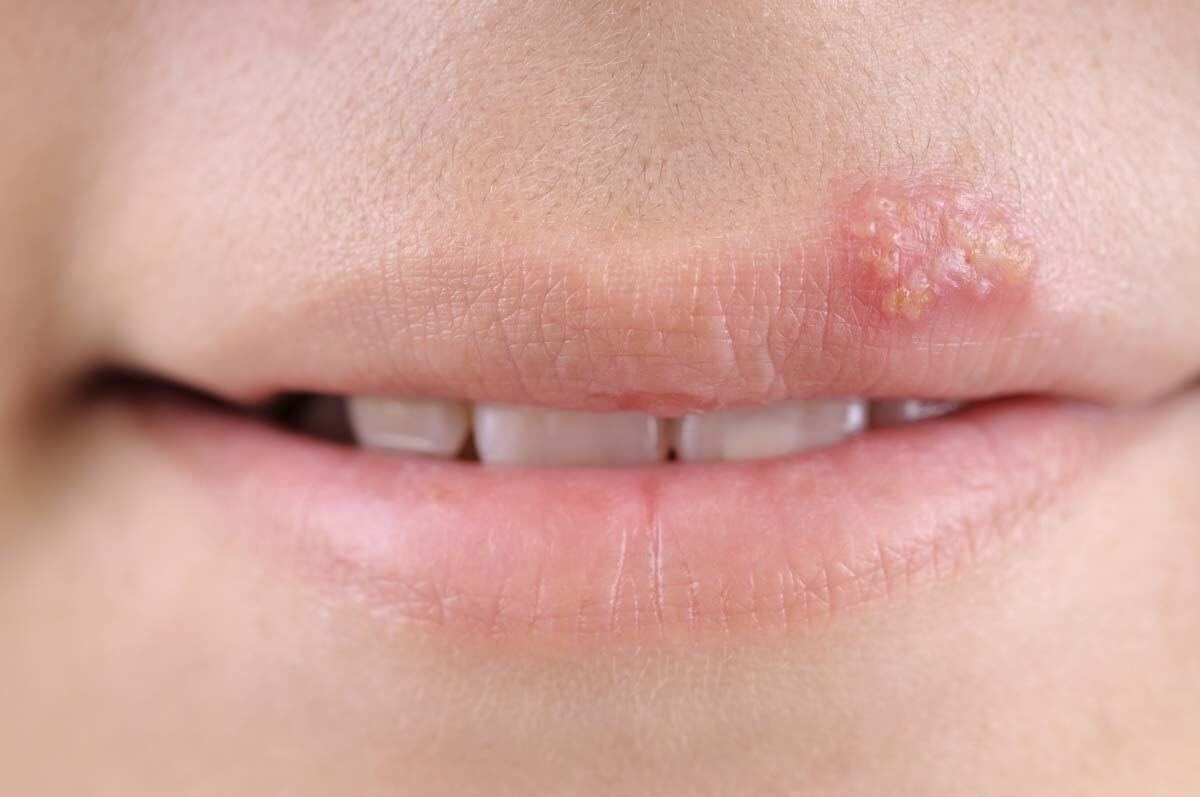
A cold sore (herpes labialis, HSV-1) can reactivate under the influence of certain triggers such as stress, fatigue, sun exposure… and sometimes after irritation or treatment on the face. This is why, before a laser session (or any “energy” treatment on the face), it is important to discuss this beforehand , especially if you have had previous outbreaks, even in the past.
This guide has a simple objective: to explain what to report , when to postpone , how to reduce the risk , and in which cases to seek medical advice before treatment.
Why a facial can trigger a cold sore
Cold sores remain dormant in the body and can reactivate when the balance is disrupted. On the face, treatments that heat the skin, create inflammation, or temporarily weaken the skin barrier can sometimes trigger an outbreak—especially around the lips (perioral area) and during more intensive protocols.
This is not a reason to “avoid laser for life”, but a reason to prepare for the session properly .
Before the session: the prevention checklist (to be followed systematically)

1) Inform us of your medical history when making your appointment.
State it clearly if you have already had:
-
a cold sore “once in your life”
-
relapses (even rare ones)
-
a flare-up triggered by the sun, stress, or after treatment
-
weakened immunity (illness, immunosuppressive treatment)
Even dermatological organizations emphasize this point: before any procedure around the mouth (laser, light therapy, injections, dental work) , you must inform the practitioner if you have cold sores. You can read the official advice in the recommendations of the American Academy of Dermatology .
2) Never treat if a flare-up is ongoing (or if warning signs are beginning)
Postpone the session if you have:
-
a visible lesion
-
or warning signs (tingling, localized burning, unusual sensation around the lips)
At this stage, the most prudent strategy is: postpone , protect the area, and seek medical advice if necessary.
3) If you have a medical history: seek medical advice for appropriate prevention
If you have ever had cold sores, especially if they are recurrent or if the session is close to the mouth, the safest thing to do is to seek medical advice (doctor / dermatologist).
Depending on your profile and the type of treatment, a doctor may decide that antiviral prevention is relevant.
Important: Avoid self-medication or regimens found online. The right choice depends on your medical history, current treatments, possible contraindications, and the planned protocol.
4) Reduce triggers in the week leading up to
Without promising “zero risk”, you can reduce the known factors:
-
Avoid strong sun exposure (and protect the area)
-
Avoid irritating the area around the mouth (harsh scrubs, highly irritating products)
-
Get enough sleep and avoid combining fatigue and stress if possible.
D-Day: What you need to check before you begin
-
You have no signs of an active herpes outbreak, not even a mild one.
-
You remind the practitioner of your medical history (if you have one).
-
You confirm the area treated (perioral or not) and the intensity of the protocol.
If your session involves a resurfacing procedure such as fractional laser treatment , this is particularly important: this type of treatment can be more “stimulating” for the skin, so prevention and selecting the right time are very important.
After the session: best practices + quick reaction
Good reflexes
-
Keep the area clean and avoid touching your face unnecessarily.
-
Follow the aftercare instructions (hydration/skin barrier, sun protection, avoid irritations).
-
Avoid friction and excessive heat if it is not recommended.
If signs appear
If you experience any warning signs or if an injury begins:
-
Contact your practitioner and/or doctor as soon as possible.
-
Don't wait "a few days to see"
The idea is not to panic: it's to react early .
When a medical opinion is absolutely necessary before booking
Seek medical advice before a facial treatment if:
-
you experience frequent or difficult flare-ups
-
Have you already experienced a reactivation after cosmetic/dental treatment?
-
You are immunocompromised or undergoing immunosuppressive treatment
-
You are pregnant/breastfeeding (as a precaution, for any medication decision)
-
You had a recent episode, even if it's "almost over"
What if I want a facial treatment, but I am “at risk”?
If you are in a period where you fear a reactivation (stress, fatigue, sun, recent history), discuss with your practitioner a more cautious plan: either postpone, or adapt the area/intensity, or consider a gentler treatment when everything is stable.
Depending on the condition of your skin and the timing, some prefer to start with non-laser treatments such as an HydraFacial® — but only when there are no active signs and after validation by the practitioner, as any irritation or manipulation of the perioral area may be contraindicated during a flare-up.
FAQ - Laser & cold sore

Can I have a facial treatment if I've already had a cold sore?
Often yes, but it should be reported. Depending on your medical history and the type of treatment, a medical opinion may be recommended to determine appropriate preventative measures.
Should I cancel if I just feel a tingling on my lip?
Yes, it's safer to postpone. Warning signs matter, even if "it's not yet visible."
Is the risk the same for all lasers?
No. It depends on the intensity, the area (especially around the mouth), and how the skin barrier is affected. Hence the importance of a consultation.
What would a reputable center do in this case?
He asks you about your medical history, checks for the absence of active signs, adapts the protocol if necessary, and refers you for medical advice when relevant.


Share:
19 comments
I have been suffering from a deadly disease (Hsv) for the past 2 years now, I had spent a lot of money going from one places to another, from churches to churches, hospitals have been my home every day residence. Constant checks up have been my hobby not until this faithful day, I was searching through the internet, I saw a testimony on how Dr Oyagu helped someone in curing his (Hsv) herpes disease, quickly I copied his email which is oyaguherbalhome@gmail.com just to give him a test I spoke to him, he asked me to do some certain things which I did, he told me that he is going to provide the herbal cure to me, which he did, then he asked me to go for medical checkup after some days after using the herbal cure, behold I was free from the deadly disease, he only asked me to post the testimony through the whole world, faithfully am doing it now, please brothers and sisters, he is great, I owe him in return. if you are having a similar problem just email him on oyaguherbalhome@gmail.com visit his website https://oyaguspellcaster.wixsite.com/oyaguherbalhome Or WhatsApp him via +2348101755322
I have been suffering from a deadly disease (Hsv) for the past 2 years now, I had spent a lot of money going from one places to another, from churches to churches, hospitals have been my home every day residence. Constant checks up have been my hobby not until this faithful day, I was searching through the internet, I saw a testimony on how Dr Oyagu helped someone in curing his (Hsv) herpes disease, quickly I copied his email which is oyaguherbalhome@gmail.com just to give him a test I spoke to him, he asked me to do some certain things which I did, he told me that he is going to provide the herbal cure to me, which he did, then he asked me to go for medical checkup after some days after using the herbal cure, behold I was free from the deadly disease, he only asked me to post the testimony through the whole world, faithfully am doing it now, please brothers and sisters, he is great, I owe him in return. if you are having a similar problem just email him on oyaguherbalhome@gmail.com visit his website https://oyaguspellcaster.wixsite.com/oyaguherbalhome Or WhatsApp him via +2348101755322
I have been suffering from a deadly disease (Hsv) for the past 2 years now, I had spent a lot of money going from one places to another, from churches to churches, hospitals have been my home every day residence. Constant checks up have been my hobby not until this faithful day, I was searching through the internet, I saw a testimony on how Dr Oyagu helped someone in curing his (Hsv) herpes disease, quickly I copied his email which is oyaguherbalhome@gmail.com just to give him a test I spoke to him, he asked me to do some certain things which I did, he told me that he is going to provide the herbal cure to me, which he did, then he asked me to go for medical checkup after some days after using the herbal cure, behold I was free from the deadly disease, he only asked me to post the testimony through the whole world, faithfully am doing it now, please brothers and sisters, he is great, I owe him in return. if you are having a similar problem just email him on oyaguherbalhome@gmail.com visit his website https://oyaguspellcaster.wixsite.com/oyaguherbalhome Or WhatsApp him via +2348101755322
I was tested positive for HSV2 and ever since then I was taking different kinds of drugs from my medical doctor but yet no improvement until I saw on the internet how a herbalist has been curing several people from different kinds of herpes virus! I immediately contacted him and after our discussion he prepared the herbal medicine and send it to me which I received and drink according to his instructions. My medical doctor just confirmed me HSV2 negative and my heart is so filled with joy so I appreciate this herbal man for curing me with his herbal medication. If you are reading this and you got Herpes virus you can contact Email:medicalmediumherbal@gmail.com or Call him on +2347035623817
I have got genital Herpes virus for some years and recently I was searching for updates online for the virus when I saw testimonies on how a herbal doctor cures Herpes with herbal meds so I decided to contact him and he guided me on what to do and he prepared and send the meds for me to drink and to my surprise I just tested negative for the second time on different lab. All the symptoms were gone immediately I stared drinking the meds! I cant believe that I got cured just by drinking a herbal medicine so I’m very grateful to this herbal doctor. reach him on his Email: medicalmediumherbal@gmail.com or Call him on +2347035623817